SICK LLX Fiber Optic Cable (LL3) – Fiber Optic Sensor Head for Photoelectric Amplifiers
Overview:
The SICK LLX (LL3) fiber optic cable is a specialized fiber optic sensor head designed to operate in conjunction with SICK photoelectric amplifiers. It enables precise object detection in confined spaces, hard-to-reach locations, or harsh industrial environments. The product line offers a wide variety of sensor head designs, plastic or glass fiber materials, lengths up to 30 m, and high-temperature resistance up to 350°C.
Product Overview of Fiber Optic Cables LLX
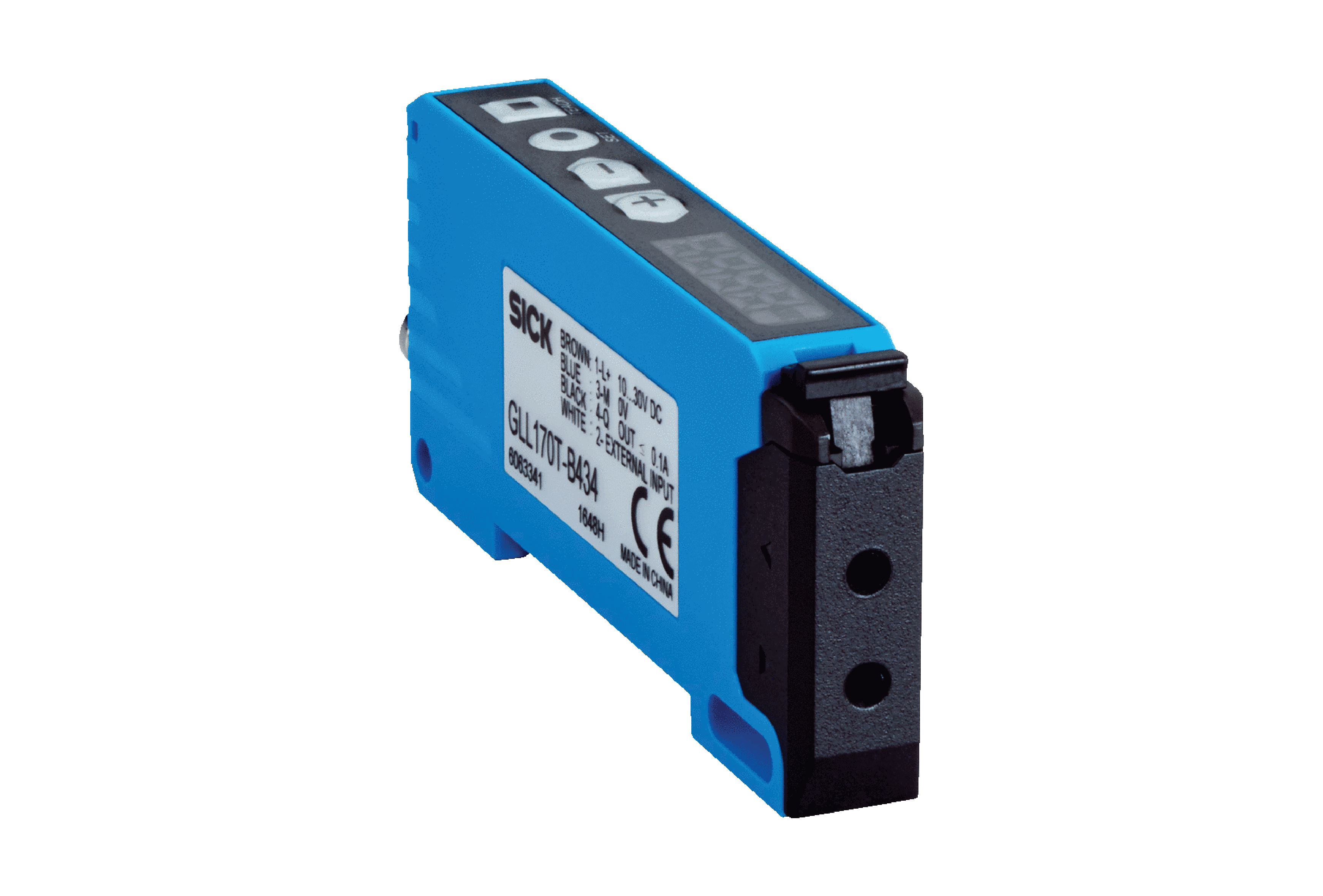
LLX (LL3) belongs to SICK’s Fiber-optic Cables product group and serves as the sensing head in fiber optic sensor systems. When paired with compatible amplifiers (GLL70, WLL80, WLL180, GLL170(T), WLL24 Ex, KTL180), these cables allow reliable detection of very small objects, high-speed targets, or positions where conventional photoelectric sensors cannot be installed. With extensive options for sensor head design, fiber material, and sheath construction, LLX solutions are widely applied in electronics automation, packaging, food & beverage, automotive, semiconductor manufacturing, as well as high-temperature or chemically aggressive environments.
Key Features:
- Operating principle: Through-beam and proximity (reflective)
- Fiber length: 150 mm to 30,000 mm (model-dependent)
- Minimum detectable object diameter: 0.0015 mm to 4 mm
- Fiber material: Plastic or glass
- Sheath material: Standard plastic, chemical-resistant plastic, stainless steel, or Teflon
Technical Specifications – LLX
| Parameter |
Value |
| Manufacturer |
SICK AG (Germany) |
| Product line |
Fiber-optic cables LLX (LL3) |
| Detection principle |
Through-beam and proximity |
| Fiber length |
150 mm … 30,000 mm (model-dependent) |
| Minimum detectable object size |
0.0015 mm … 4 mm (model-dependent) |
| Fiber material |
Plastic and glass |
| Sheath material |
Plastic, chemical-resistant plastic, stainless steel, Teflon |
| Minimum bending radius |
1 mm (model-dependent) |
| Cut-to-length capability |
Yes (most plastic fiber models) |
| Maximum operating temperature |
Up to 350 °C (glass fiber + stainless steel sheath models) |
| Compatible amplifiers |
GLL70, WLL80, WLL180, GLL170(T), WLL24 Ex, KTL180 |
Source: SICK Product Overview – Fiber-optic cables LLX (update 2025-11-14). Download datasheet link
Classification of Fiber Optic Sensor LLX Heads by Design
The LL3 series offers multiple sensor head configurations to meet diverse installation requirements:
| Sensor Head Type |
Key Features |
Typical Applications |
| Threaded sleeve (M3–M12) |
Secure mounting with nuts or brackets; optional integrated lens |
Precision parts detection in machining and mechanical assembly |
| Smooth sleeve (Ø1.5–6 mm) |
Quick clamping installation; cut-to-length capability |
Confined spaces and flexible production lines |
| Flat type |
Fits into narrow gaps; precise orientation |
Label and thin object edge detection |
| 90° deflection |
Reduces cable stress; ideal for angled or obstructed mounting |
Corner areas, control cabinets |
| Array (light band) |
Wide detection area along the entire light band; optional masking |
Small object detection across wide zones |
| Long end sleeve (flexible) |
Robust mounting with flexible probe tip for difficult access |
Detection in hard-to-reach locations |
Material Selection and Operating Environments
- SICK offers LLX cables with various material combinations to suit different industrial conditions: Plastic fiber + plastic sheath: Standard, highly flexible, cut-to-length on site. Suitable for most general automation applications.
- Glass fiber + stainless steel sheath: Temperature resistance up to 350 °C, excellent chemical resistance. Ideal for furnaces, laser welding, and oily environments.
- Chemical-resistant plastic sheath: Suitable for chemical processing lines, electroplating, and printing industries.
- Teflon sheath: Extreme temperature and chemical resistance – for specialized applications.
- Vacuum-rated fiber: For installation through vacuum chamber walls; reliable detection in semiconductor and thin-film processes.
Industrial Applications of Fiber Optic Sensors LLX
- Threaded Fiber (M3–M12): Provides secure, vibration-resistant mounting. Commonly used in electronics assembly lines, automated machinery, industrial robots, precision mechanical inspection, and automotive manufacturing.
- Flat Fiber: Ideal for space-constrained installations and thin object detection. Widely applied in label detection, product tagging, film/web handling, packaging, paper processing, and high-speed sorting systems in food and pharmaceutical industries.
- Array Fiber: Creates a wide detection zone for simultaneous multi-position monitoring. Used for product inspection on conveyors, missing label detection, web edge guidance, and automated quality control systems.
- Glass Fiber: Designed for high-temperature or harsh environments. Suitable for industrial furnaces, laser welding systems, metallurgy, glass and ceramic production, and other high-heat applications.
- Chemical-Resistant Fiber: Special sheath materials ensure stable operation in acidic, alkaline, or solvent-rich environments. Commonly installed in electroplating lines, chemical plants, battery manufacturing, wastewater treatment, and highly corrosive processes.
Comparison of plastic and glass fiber optic cables
| Criterion |
Plastic Fiber |
Glass Fiber |
| Flexibility |
Very high |
Moderate |
| Minimum bending radius |
Small |
Larger |
| Cut-to-length capability |
Yes |
No |
| Temperature resistance |
Lower |
Higher (up to 350°C) |
| Chemical resistance |
Moderate |
Excellent |
| Service life in harsh environments |
Moderate |
High |
| Cost |
Low |
Higher |
| Typical applications |
Electronics, packaging, robotics |
Furnaces, laser welding, chemicals |
Conclusion: Plastic fibers are ideal for standard automation tasks due to their high flexibility, ease of installation, and lower cost. Glass fibers are the optimal choice for high-temperature, chemically aggressive, or demanding long-term reliability applications. Selection should be based on the operating environment, required sensing distance, and system lifecycle expectations.
Frequently Asked Questions (FAQ)
Q1. Which amplifiers are compatible with SICK LLX fiber optic cables?
LLX cables are compatible with various SICK photoelectric amplifiers such as GLL70, GLL170(T), WLL80, WLL180, WLL24 Ex, and KTL180, depending on the specific model.
Q2. Should I choose plastic or glass fiber optic cable?
Plastic fiber is suitable for standard applications thanks to its high flexibility and cut-to-length capability. Glass fiber is preferred for high-temperature, chemical, or long-term durability requirements.
Q3. How small an object can SICK LLX fiber optic cables detect?
Depending on the model, LLX cables can detect objects as small as approximately 0.0015 mm to 4 mm.
Q4. Are SICK LLX fiber optic cables suitable for high-temperature environments?
Yes. Certain glass fiber models with specialized metal sheaths can operate at temperatures up to 350°C.
Q5. Can SICK LLX fiber optic cables be cut to length on site?
Yes. Many plastic fiber models can be cut to the desired length using SICK’s dedicated cutting tools.
Contact for Purchasing Fiber Optic Cables LLX SICK
AUMI – Official authorized distributor of SICK in Vietnam. Full manufacturer warranty, complete CO/CQ documentation, and 24/7 technical support.
📞 Hotline: 0917 991 589 (Hanoi) | 0932 226 100 (TP.HCM)
📧 Email: [email protected]
🌐 Website: https://aumi.com.vn/
Addresses:
- Hanoi: B44, Villa Lot, Viet Hung Urban Area, Viet Hung Ward
- Ho Chi Minh City: 2nd Floor, HS Building, 260/11 Nguyen Thai Binh, Bay Hien Ward
- Da Nang: 9th Floor, PV Bank Building, No. 2 30-4 Street, Hoa Cuong