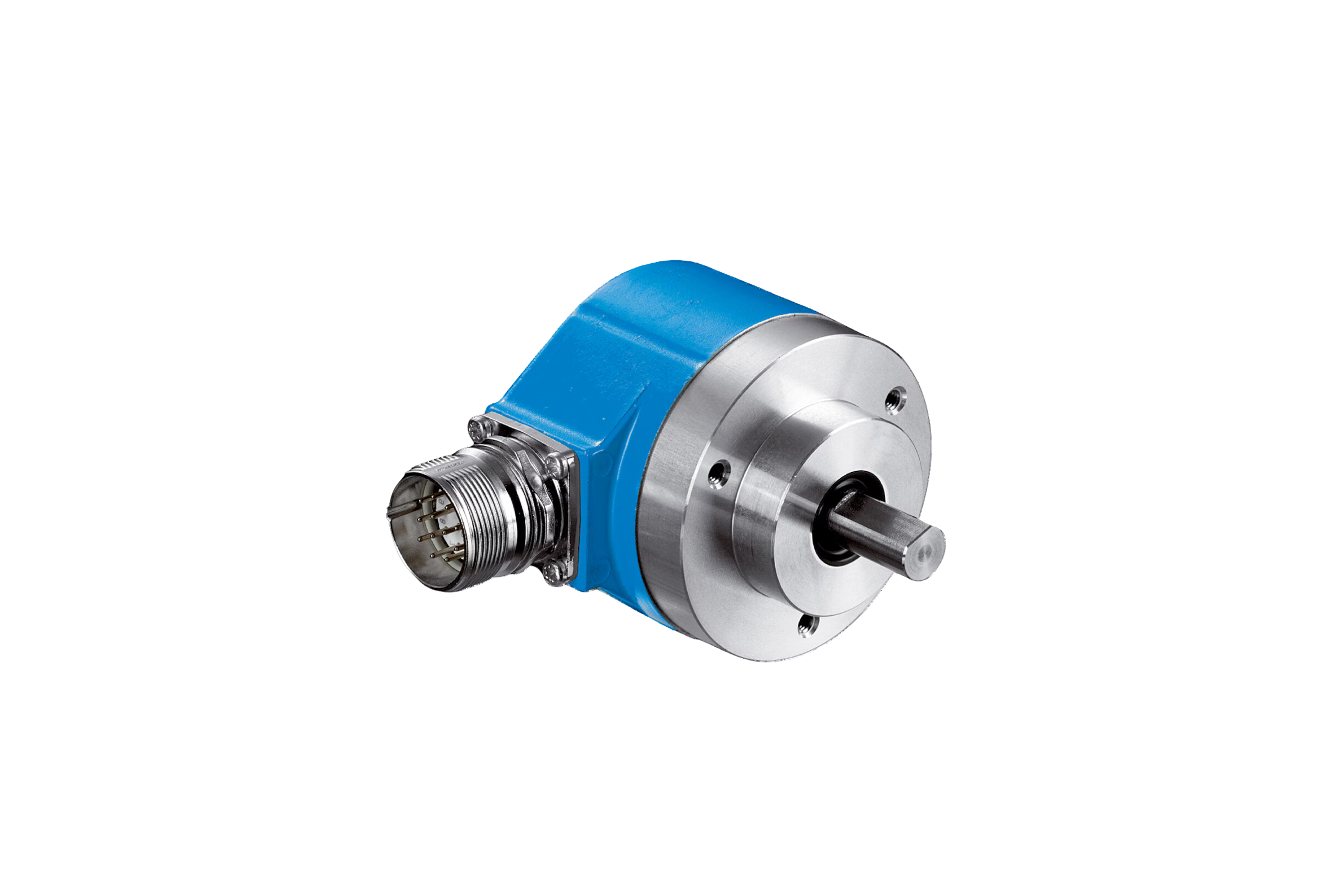
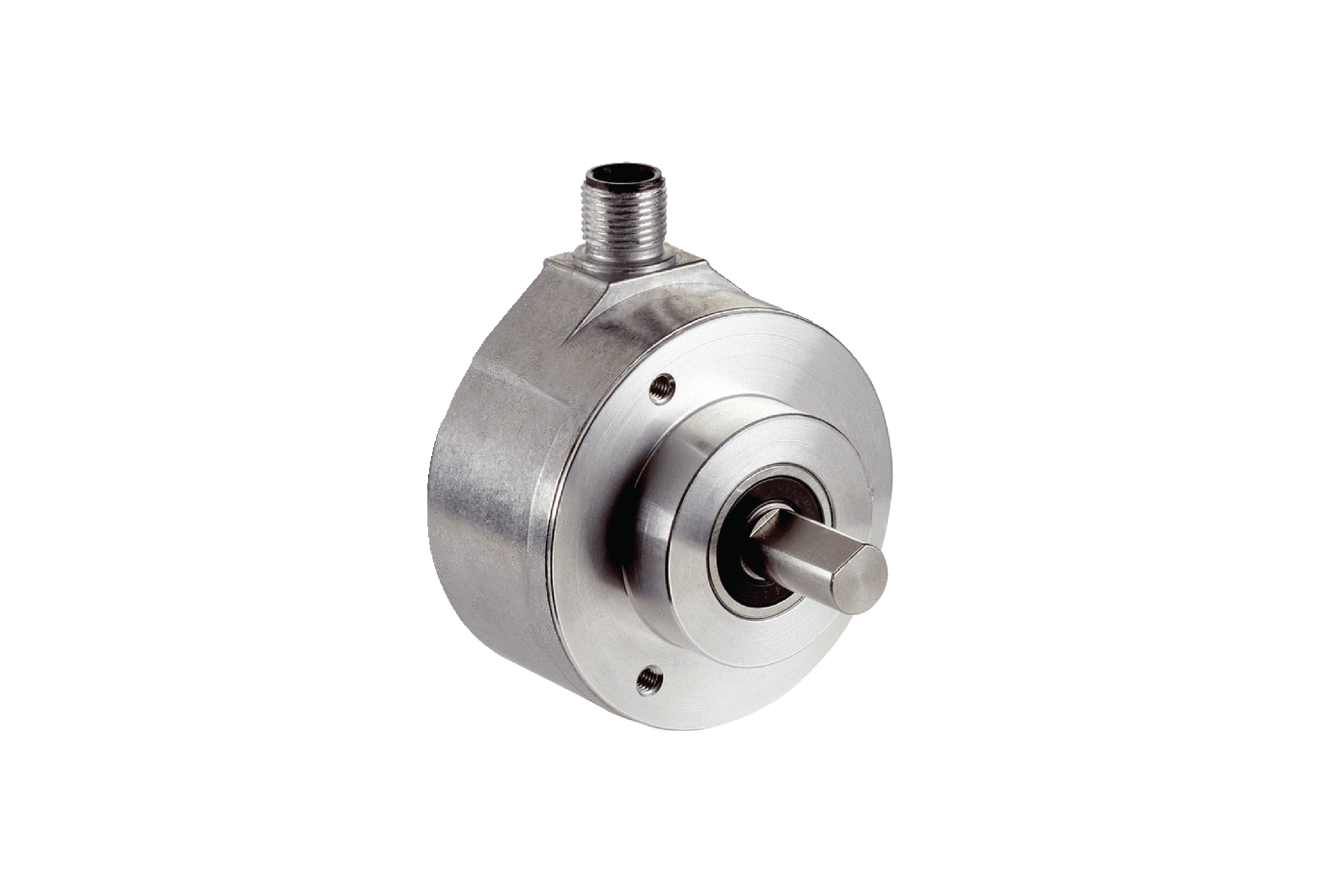
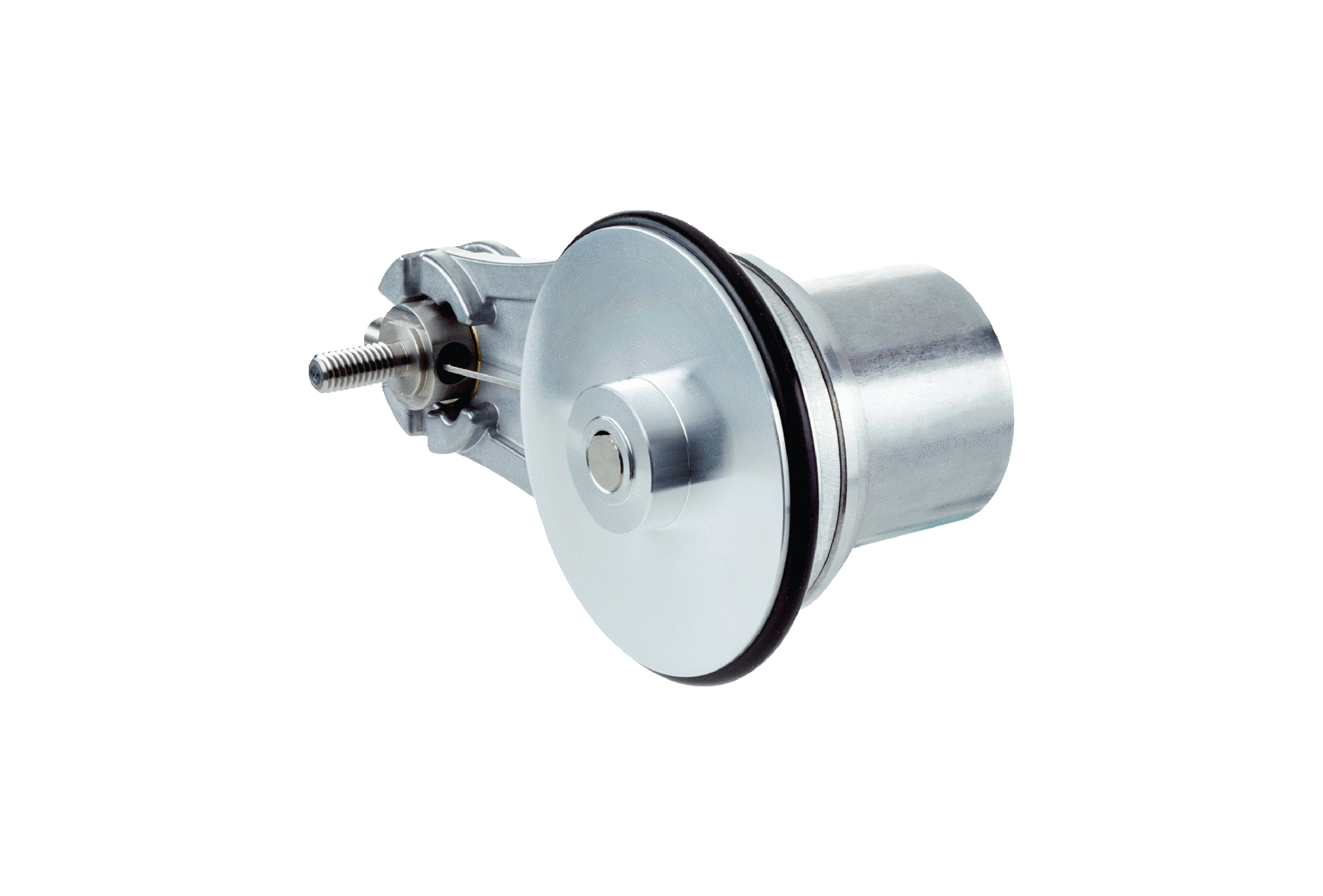
MWS075 SICK Measuring Wheel Encoder – Reliable Non-Slip Measurement
Overview:
- Compact measuring wheel system with low installation depth, saving valuable machine space
- Consistent spring-loaded contact force compensates for uneven surfaces
- Quick and easy installation for fast commissioning
- Flexible solution for linear measurement tasks with various wheel surfaces and adjustable contact pressure
- Mechanical travel limit protects the spring from overload and prevents system damage
- Highly customizable with multiple encoder types and interface options
Product Overview – MWS075 SICK
The MWS075 is a modular measuring wheel encoder from SICK designed for precise contact-based linear speed and position measurement. With its extremely compact axle spacing of only 63.5 mm, the MWS075 can be easily integrated into a wide range of industrial applications. It is particularly suitable for conveyor systems, packaging lines, and roll-to-roll material processing in Vietnam.
Key Features:
- Resolution: 0.05 – 1,310.72 pulses/mm (depending on encoder version)
- Measuring wheel circumference: 200 mm or 300 mm
- Interfaces: Incremental (TTL/HTL/Push-Pull/RS-422), SSI, CANopen, IO-Link, EtherCAT, EtherNet/IP, PROFINET
- Operating temperature: -20°C to +85°C (some variants up to -40°C to +100°C)
- Adjustable contact force: 0 to 15 N (manual one-step adjustment)
- Maximum spring travel: 14 mm with mechanical overload protection
- Flexible encoder mounting on both sides with 30° angle adjustment
Technical Specifications of MWS075 Measuring Wheel Encoder
| Parameter |
Value / Range |
Notes |
| Measuring Range |
±3 mm (continuous working range) |
Compensates for uneven surfaces |
| Maximum Spring Travel |
14 mm |
With mechanical overload protection |
| Contact Force |
0 ~ 15 N (manually adjustable) |
Recommended pretension: 15 N at 10 mm |
| Measuring Wheel Circumference |
200 mm or 300 mm |
Depending on variant |
| Resolution |
0.05 ~ 1,310.72 pulses/mm (depending on encoder) |
Up to 65,536 ppr possible |
| Measuring step / Increment |
0.1 mm (Typical) |
Depends on the wheel circumference and the number of pulses. |
| Repeatability |
< 0.1 mm |
Mechanical, minimal backlash |
| System Accuracy |
Application-dependent (reference run recommended) |
Affected by wheel wear, temperature, and surface |
| Maximum Traversing Speed |
Up to 6,000 – 8,000 rpm (encoder dependent) |
Not for continuous operation at max speed. Self-heating ~3.3 K per 1,000 rpm |
| Interfaces |
Incremental (TTL/HTL/Push-Pull/RS-422), SSI, CANopen, IO-Link, EtherCAT, EtherNet/IP, PROFINET |
Highly versatile |
| Supply Voltage |
4.5 ~ 32 V DC |
Depends on attached encoder |
| Current consumption |
No specific regulation (usually < 100 mA) |
Encoder-dependent |
| Connection Type |
M12 (4-pin / 8-pin), M23, cable (1.5 m ~ 10 m) |
Rotatable connector option |
| Housing Material |
Aluminum (measuring wheel core), PVC (cable), alloy |
Industrial-grade durability |
| Weight |
Approximately 0.5 ~ 1 kg (depending on configuration) |
Dependent on encoder and spring mechanism |
| Operating Temperature |
–20 °C … +85 °C (some variants –40 °C … +100 °C) |
Depends on cable and encoder |
| Storage Temperature |
–40 °C … +100 °C |
– |
| Relative humidity |
Not specifically defined (typically ≤ 95%, non-condensing) |
According to industrial standards |
| Vibration resistance |
According to EN 60068-2 (no detailed specification provided in the overview) |
– |
| Shock resistance |
According to industrial standards |
– |
Specifications from the SICK 2026 Product Catalog.
Comparison Chart: SICK MWS075 vs MWS120
This is a basic comparison table between the SICK MWS075 (compact model) and the SICK MWS120 (popular model, stronger contact force):
| Parameter |
MWS075 (Compact) |
MWS120 (Standard) |
Remarks |
| Axle Spacing |
63.5 mm |
120 mm |
MWS075 is much more compact |
| Maximum Spring Travel |
14 mm |
10 mm |
MWS075 offers better surface compensation |
| Contact Force |
0 ~ 15 N (adjustable) |
0 ~ 24 N (6 steps) |
MWS120 provides stronger force |
| Measuring Wheel Circumference |
200 / 300 mm |
200 mm (most common) |
Similar |
| Resolution |
0.05 ~ 1,310 pulses/mm |
Same (encoder dependent) |
Equivalent flexibility |
| Interfaces |
Incremental, SSI, CANopen, IO-Link, EtherCAT, EtherNet/IP, PROFINET |
Incremental, SSI, CANopen, IO-Link, Fieldbus |
Equivalent |
| Supply voltage |
4.5 ~ 32 V DC |
10 ~ 30 V DC (some variants have a wider range) |
MWS075 offers more voltage flexibility |
| Operating Temperature |
–20 °C … +85 °C (up to +100 °C) |
–30 °C … +80 °C |
MWS075 has better temperature range in some variants |
| Typical Applications |
Limited space, uneven surfaces, compact machines (packaging, printing, roll handling) |
Applications requiring strong, stable pressing force (paper, fabric, thin metal, cable) |
– |
Applications of MWS075 in Industry
Thanks to its high resolution and excellent ability to compensate for surface irregularities up to ±3 mm, the MWS075 is ideal for precise linear measurement in Vietnamese manufacturing plants:
- Printing and Packaging Lines: Mounted directly on web materials (film, paper, labels) for accurate speed and length measurement. Adjustable contact force (0–15 N) prevents damage to delicate surfaces.
- Conveyors and Logistics: Measures conveyor belt speed in automated warehouses and sorting systems.
- Wood and Building Materials: Monitors speed and length of plywood, laminates, and panels on production lines.
- Battery and Electronics Manufacturing: Provides precise speed control for roll-to-roll processes in lithium-ion battery foil production.
- Laser and Inkjet Printing: Ensures perfect synchronization between print head and material movement to prevent registration errors.
Frequently Asked Questions about SICK MWS075
- Is the MWS075 easy to install and integrate with PLCs?
Yes. The MWS075 features a very compact design with 63.5 mm axle spacing, 14 mm spring travel (±3 mm surface compensation), and manually adjustable contact force from 0 to 15 N. It supports a wide range of industrial interfaces (Incremental TTL/HTL, SSI, IO-Link, EtherCAT, EtherNet/IP, PROFINET, etc.), allowing direct and straightforward integration with Siemens, Mitsubishi, Omron, and other automation systems.
- Is the MWS075 suitable for harsh industrial environments?
Yes. With an operating temperature range from –20 °C to +85 °C (some variants up to –40 °C to +100 °C), the MWS075 is well-suited for demanding conditions. Multiple wheel surface options (NBR, PU, knurled aluminum, etc.) ensure compatibility with different materials. The spring mechanism has a service life of over 1.4 million cycles.
- What is the price of the SICK MWS075?
The price depends on the encoder type (incremental or absolute), interface (IO-Link, EtherNet/IP, PROFINET, EtherCAT, etc.), wheel circumference, and surface material. Please contact AUMI at 0917 991 589 for the most competitive and accurate quotation based on your specific application.
- Where should I buy the genuine SICK MWS075?
AUMI is the official authorized distributor of SICK in Vietnam. We provide 100% genuine MWS075 products with full CO/CQ certificates, original SICK labels, global warranty, and comprehensive 24/7 technical support from our experienced engineering team.
AUMI – Official SICK Distributor in Vietnam. Genuine products with full warranty, CO/CQ documentation, and 24/7 technical support.
📞 Hotline: 0917 991 589 (Hanoi) | 0932 226 100 (Ho Chi Minh City)
📧 Email: [email protected]
🌐 Website: https://aumi.com.vn/
📍 AUMI Addresses:
- Hanoi: B44, Villa Lot, Viet Hung Urban Area, Long Bien District
- Ho Chi Minh City: 2nd Floor, HS Building, 260/11 Nguyen Thai Binh, Tan Binh District
- Da Nang: 9th Floor, PV Bank Building, No. 2 30-4 Street, Hoa Cuong Ward, Da Nang City, Vietnam
🔗 Official Datasheet